
Civil War trousers: how to choose and measure your pair
Compare Union cavalry, mounted cavalry and Confederate-style catalog examples, then check waistband, leg length and boots.
Updated
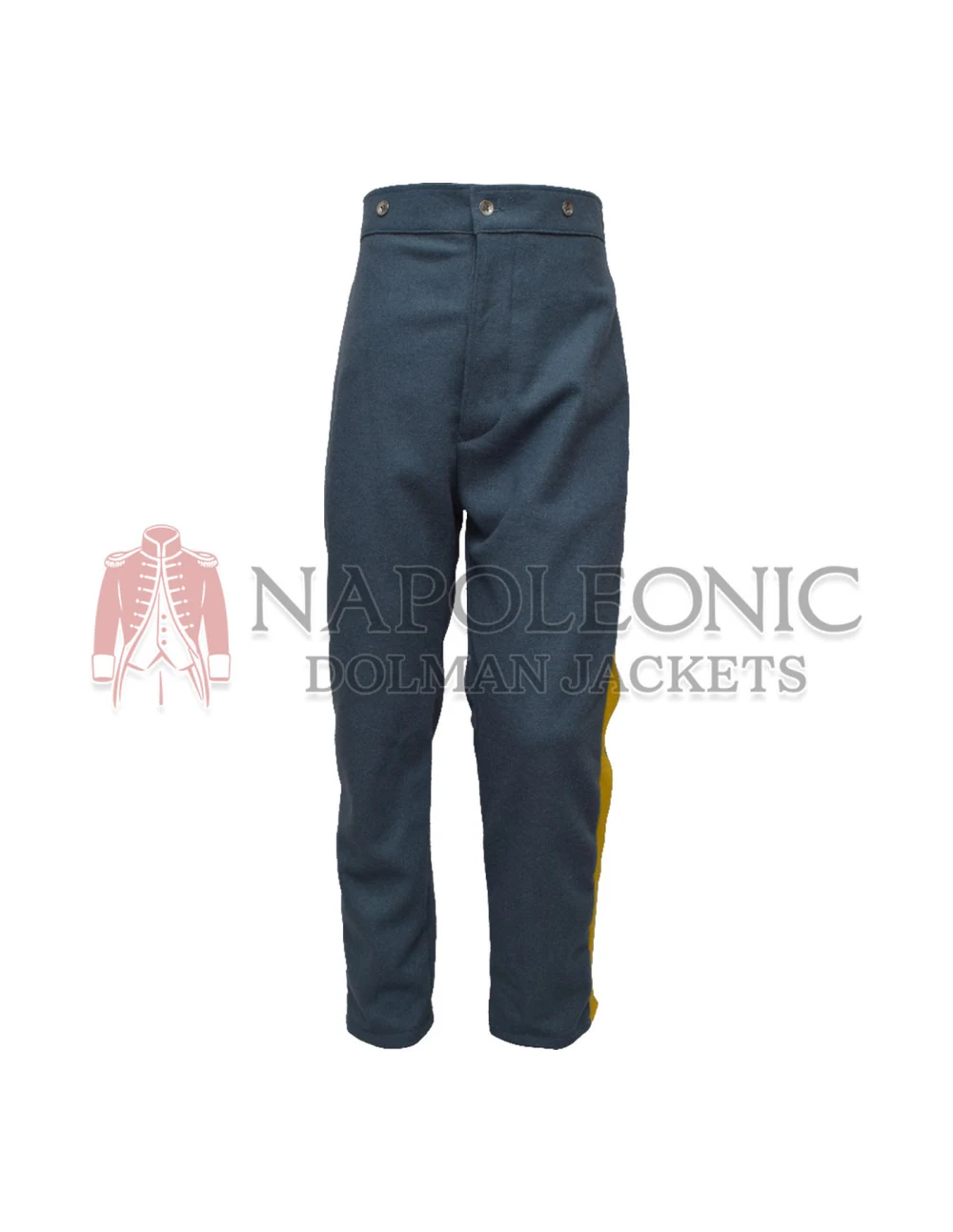
Check the uniform reference before choosing a pair
Start with the unit, impression and date your event or costume calls for. Ask the event organiser for a kit list before choosing shade, trim or cut. The Smithsonian catalogs both Model 1854 dismounted trousers and Colonel Robert W. Harper’s trousers. They are references for individual garments. Match your own brief to the appropriate reference.
Compare the reproduction photos and trim
Look at the full leg as well as the outer seam. The US Union Cavalry Trousers and Mounted Cavalry Sergeant Trousers are pictured in blue with contrasting side trim. The Civil War Troops CS Trouser shows a darker, plain leg. Compare the tone against your coat and confirm requirements with your group before assuming trim, shade or closures match.
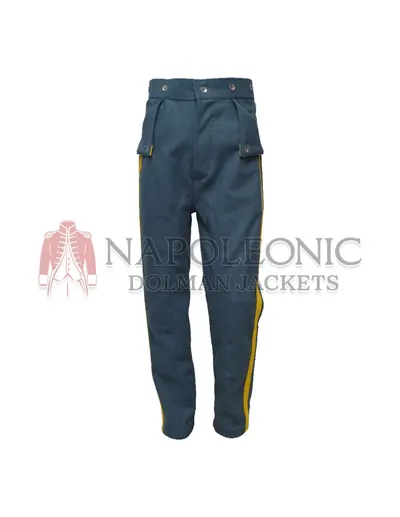
Measure the trouser waist and leg with your kit
Take a waist measurement where the trouser waistband is intended to sit, then measure around the fullest point of the seat. Measure the inside leg to your intended hem with your event boots on. If you use braces, ask whether the waistband has suitable attachment points. Check knee and seat room when sitting, climbing or kneeling, and confirm the finished ankle opening if the trouser must tuck into a close-fitting boot.
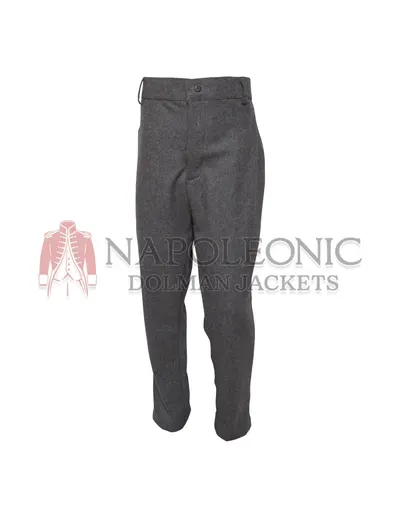
Match your trousers with your coat
Compare the garment against your event reference before you order. Start with the Civil War trousers collection, the three examples above and the sack coat and frock coat comparison. Keep the garment SKU, the reference photo and your units beside the dimensions from the measurement guide.